
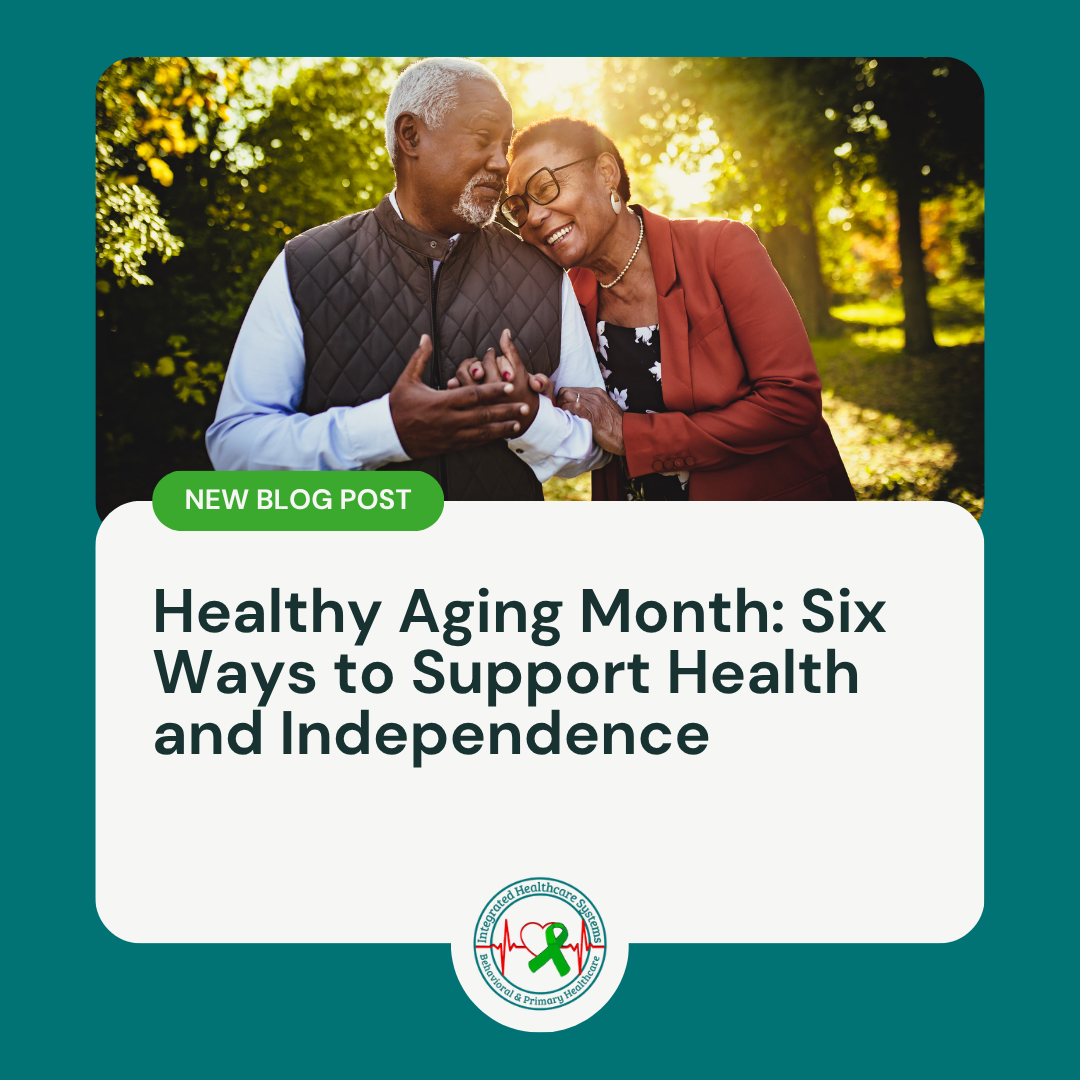
September is Healthy Aging Month, an opportunity to focus on the everyday choices and supportive care that help people maintain their health, well-being, and independence as they age.
Healthy aging does not mean avoiding every health challenge. It means taking an active role in physical and emotional health, addressing concerns early, and having support when needs change. The following healthy aging tips for older adults can also help family members and caregivers start thoughtful conversations about care.
- Keep Up With Preventive Care
Routine healthcare visits allow older adults and their providers to review changes in health, discuss concerns, and determine which screenings or vaccinations may be appropriate.
A preventive care check-in may include:
- Reviewing blood pressure and other routine health measures
- Discussing age-appropriate screenings
- Checking vaccination needs
- Talking about sleep, nutrition, mobility, and emotional health
- Reviewing new symptoms or changes in existing conditions
Recommendations vary based on age, health history, medications, and individual risk factors. A healthcare provider can help create a personalized plan.
- Review Medications Regularly
Medication needs can change over time, especially when someone sees multiple providers or manages more than one health condition. Keeping an accurate medication list can make appointments safer and more productive.
The list should include prescription medicines, over-the-counter products, vitamins, and supplements. Bring it to medical appointments and pharmacy visits, and note any side effects, missed doses, or questions.
The National Institute on Aging recommends that older adults share an up-to-date medication list with their healthcare providers. Medications should never be stopped, combined, or adjusted without guidance from a qualified provider.
- Make Movement Part of the Routine
Regular movement can support strength, balance, mobility, and everyday function. The right activity will look different for each person.
Depending on health and ability, options may include:
- Walking
- Chair exercises
- Stretching
- Water-based activity
- Balance exercises
- Light strength training
- Gardening or active household tasks
Start gradually and choose activities that feel manageable. Anyone with mobility limitations, chronic conditions, pain, dizziness, or a history of falls should speak with a healthcare provider before beginning a new exercise routine.
- Protect Social Connection
Social wellness is an important part of overall health. Retirement, transportation challenges, hearing difficulties, illness, or the loss of loved ones can make it harder for some older adults to stay connected.
Small, consistent efforts can help. Schedule regular calls, share a meal, attend a community activity, visit a place of worship, or explore volunteer opportunities. When in-person connection is difficult, phone and video conversations can help maintain meaningful relationships.
Family members can also watch for changes such as withdrawing from usual activities or losing interest in connecting with others.
- Include Mental Wellness in the Conversation
Emotional health deserves the same attention as physical health. Persistent sadness, anxiety, grief, sleep changes, confusion, or a loss of interest in familiar activities should not be dismissed as an inevitable part of aging.
Encourage honest conversations without judgment. A primary care or behavioral health provider can assess concerns and recommend appropriate support.
Integrated Healthcare Systems offers behavioral health services for adults and older adults in a compassionate, collaborative setting.
- Prepare for Changing Care Needs
Planning ahead can make it easier to respond when health or daily needs change. Older adults should remain at the center of these conversations whenever possible.
A simple care-preparation checklist may include:
- Current medications, allergies, and health conditions
- Names and contact information for healthcare providers
- Upcoming appointments and questions to ask
- Emergency contacts
- Transportation needs
- Changes in mobility, memory, mood, or daily routines
- Preferences about family involvement in care
Support should strengthen an older adult’s voice and independence. Ask what help would feel useful instead of making assumptions.
Healthy Aging Starts With a Check-In
The Office of Disease Prevention and Health Promotion emphasizes that healthy aging is a lifelong process supported by healthy habits, quality healthcare, safe living conditions, and active participation in care.
Healthy Aging Month is a good time to pause and ask: Is there an appointment that needs to be scheduled, a medication question that needs attention, or a loved one who could use more support?
Schedule a Check-In
Schedule a primary healthcare appointment with IHCS to discuss preventive, physical, and emotional wellness needs. Family members can also help a loved one prepare by organizing their medication list, writing down questions, and offering to join the appointment when appropriate.