
Blog post body:
Managing your health can involve much more than attending an appointment. You may need to contact several providers, gather documents, complete benefit applications, follow up on referrals, or find community resources. When these responsibilities begin to pile up, case management services can provide practical support.
At Integrated Healthcare Systems (IHCS), case management is centered on the individual. A case manager helps patients understand their next steps, connect with appropriate services, and keep different parts of their care moving in the same direction.
What Are Case Management Services?
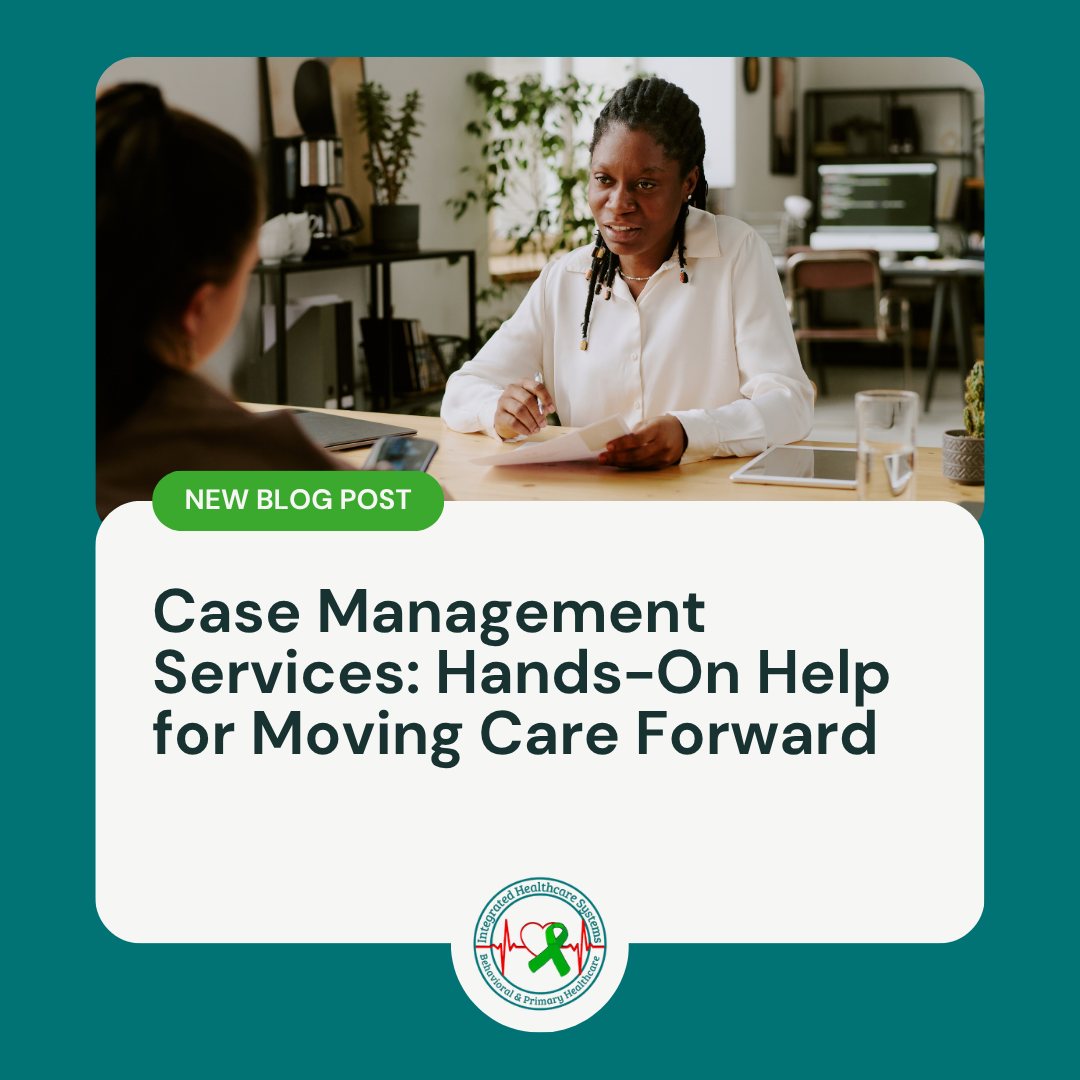
Case management is a collaborative service that helps people navigate healthcare and community support systems. Instead of handing someone a list of phone numbers or instructions, a case manager works alongside them to identify needs, create a plan, make connections, and follow up.
The type of assistance provided depends on each person’s needs, goals, circumstances, and eligibility. Support may include:
- Coordinating medical or behavioral health appointments
- Connecting patients with community resources
- Making and tracking referrals
- Helping patients navigate financial or insurance benefits
- Organizing forms and supporting documentation
- Communicating with providers and support organizations
- Following up on services and next steps
IHCS offers Targeted Case Management to help eligible adults and children access medical, social, educational, financial, and other supportive services.
Help With Appointments and Referrals
Receiving a referral is only the beginning. Patients may still need to determine whom to contact, what information to provide, and how the new service fits into their existing care.
A case manager can help clarify the referral process, support appointment coordination, and follow up on whether a connection was made. When several professionals or organizations are involved, case management can also improve communication and help everyone work from a clearer understanding of the patient’s needs.
This hands-on assistance is especially valuable for people balancing physical healthcare, behavioral healthcare, housing concerns, or other responsibilities at the same time.
Connecting Patients With Benefits and Resources
Many programs have their own applications, eligibility requirements, and documentation processes. That can make it difficult to know where to begin.
Case management services may help patients explore and connect with resources related to:
- Financial and insurance benefits
- Housing and daily living needs
- Primary and specialty healthcare
- Mental health and recovery services
- Education, employment, or vocational support
- Transportation, food, and other community needs
Case managers do not control eligibility decisions or guarantee approval. Their role is to help patients understand available options, prepare for the process, and connect with the appropriate agency or provider.
Support With Documentation and Follow-Through
Paperwork can become a significant barrier to receiving services. Missing information, unfamiliar forms, or unclear instructions may delay an application or referral.
A case manager can help identify which documents may be needed, organize information, and keep track of outstanding tasks. They may also follow up with the patient or another organization so that important next steps are less likely to be overlooked.
This support is not about taking control away from the patient. It is about making the process easier to understand and helping each person stay involved in decisions about their care.
Case Management Strengthens Care Coordination
Health and everyday stability are closely connected. A medical concern may be affected by transportation, housing, insurance, or access to behavioral health support. Addressing only one need may leave other barriers in place.
IHCS’s integrated approach brings primary healthcare, behavioral healthcare, case management, and supportive services together. Case managers help connect these areas while respecting each patient’s priorities, strengths, and goals.
For community partners, this coordination can also create a clearer path for referrals. By working together, healthcare providers, social service organizations, schools, housing programs, and other partners can help individuals access more connected support.
Ask About Case Management Support
Current IHCS patients who need help navigating appointments, resources, referrals, benefits, documentation, or coordinated care are encouraged to speak with the IHCS team.
Community partners may also contact IHCS to ask about case management services or discuss a potential referral.
Ask about case management support.