
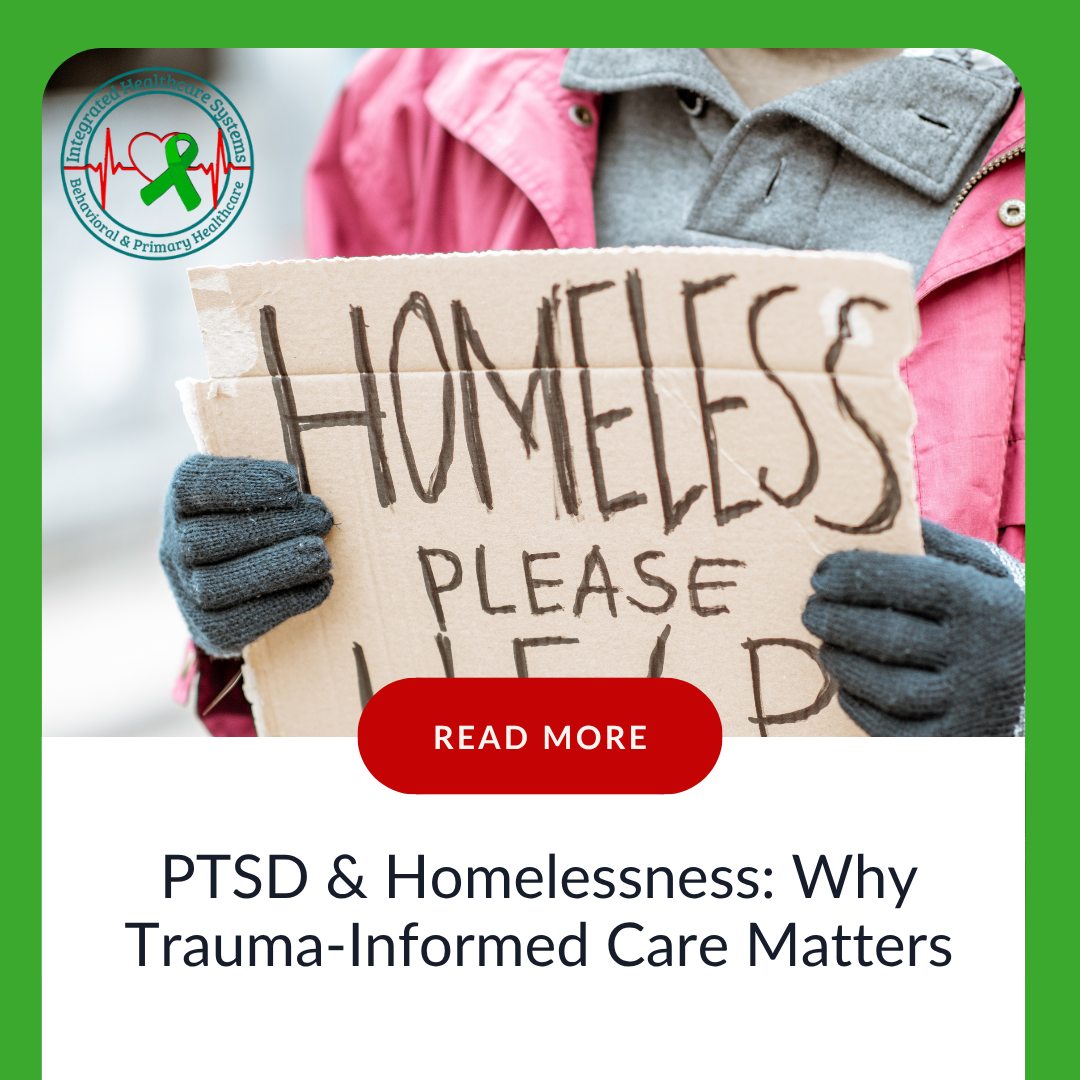
Every June, PTSD Awareness Month shines a light on the realities of trauma and the importance of compassionate mental health support. Observed throughout the month—with June 27 recognized as PTSD Awareness Day—this awareness initiative helps educate the public, reduce stigma, and encourage individuals to seek care and support.
For many people, Post-Traumatic Stress Disorder (PTSD) is often misunderstood. Some associate PTSD only with combat veterans or major catastrophic events, when in reality, trauma can affect anyone. Experiences such as abuse, violence, neglect, loss, housing instability, or living in unsafe environments can all contribute to PTSD.
At Integrated Healthcare System (IHCS), we recognize that trauma and homelessness are deeply connected. For individuals experiencing homelessness, trauma is often not a single past event—it can be an ongoing experience that affects both physical and mental wellbeing every day.
The Connection Between PTSD and Homelessness
Homelessness and PTSD often exist in a difficult cycle.
Studies show that up to 53% of individuals experiencing homelessness also experience PTSD. For some, trauma contributes to housing instability, making it harder to maintain employment, relationships, or consistent care. For others, the experience of homelessness itself becomes traumatic.
Living without stable housing can mean facing:
- Unsafe environments
- Chronic stress and uncertainty
- Exposure to violence or abuse
- Lack of sleep and security
- Ongoing fear about survival and safety
Over time, these experiences can deeply impact mental health and make recovery more challenging without support.
This is why trauma-informed care matters.
What Is Trauma-Informed Care?
Trauma-informed care means understanding that many individuals carry experiences that affect how they respond to stress, relationships, healthcare, and support systems.
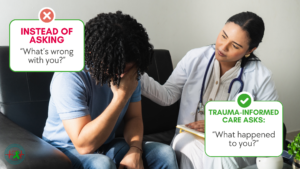
This approach creates environments where people feel safe, respected, and supported rather than judged or dismissed.
At IHCS, trauma-informed care is integrated into the way services are delivered—through compassion, patience, collaboration, and understanding.
4 Symptoms People May Not Realize Could Be PTSD
PTSD symptoms are not always obvious. Many individuals may not even realize that what they are experiencing could be connected to trauma.
Some lesser-known symptoms can include:
1. Constant Irritability or Anger
Trauma can keep the body in a constant state of alertness. What may appear as frustration or anger can actually be a nervous system responding to stress and fear.
2. Difficulty Sleeping or Feeling Safe
Many individuals with PTSD struggle with insomnia, nightmares, or feeling unable to fully relax—even in safe environments.
3. Avoiding Certain Places or Conversations
People experiencing PTSD may avoid situations, people, or topics that remind them of traumatic experiences, sometimes without fully realizing why.
4. Emotional Numbness
Some individuals disconnect emotionally as a way to cope with overwhelming experiences. This can make it difficult to maintain relationships or express feelings openly.
Breaking the Stigma Around PTSD
One of the biggest barriers to mental health care is stigma.
Many individuals fear being labeled as “weak,” “unstable,” or “broken” for struggling with trauma-related symptoms. This stigma often prevents people from seeking help early, allowing symptoms to worsen over time.
But PTSD is not a personal failure. It is a mental health condition that can affect anyone after experiencing trauma or prolonged stress.
Healing begins when people feel safe enough to ask for support.
How IHCS Supports Individuals Experiencing PTSD
IHCS provides integrated, person-centered services designed to support both mental and physical wellbeing.
➾ Behavioral Health Services
IHCS offers counseling, mental health support, assessments, and treatment services in a compassionate environment that prioritizes dignity and recovery.
➾ Primary Healthcare
Trauma affects more than mental health. Physical health challenges, chronic stress, and untreated medical conditions often overlap with PTSD, making integrated healthcare essential.
➾ Permanent Supportive Housing
Housing stability can play a critical role in recovery. Through supportive housing programs, IHCS helps individuals access safe environments where healing and long-term stability become more possible.
Trauma-Informed Community Support
IHCS also provides outreach opportunities and monthly pop-up clinics that connect individuals with healthcare resources, support services, and referrals in a welcoming setting.
Sometimes, taking the first step toward care starts with simply being met with compassion.
Why Awareness Matters
PTSD Awareness Month is not just about education—it is about understanding the realities many individuals face every day.
When communities become more informed about trauma, stigma begins to decrease. Conversations become more compassionate. And individuals struggling silently become more likely to seek support.
Awareness creates space for healing.
How You Can Support the Mission
There are many ways to support individuals experiencing trauma and housing instability:
👉 Donate – Help expand access to behavioral health services, supportive housing, and trauma-informed care
👉 Refer Someone – Connect someone experiencing mental health challenges or homelessness to IHCS services
👉 Visit a Monthly Pop-Up Clinic – Encourage individuals to access healthcare resources and supportive services in a welcoming environment
At IHCS, we believe healing starts with compassion, safety, and support.
This PTSD Awareness Month, let’s continue breaking stigma, supporting trauma survivors, and creating pathways toward recovery—together.