
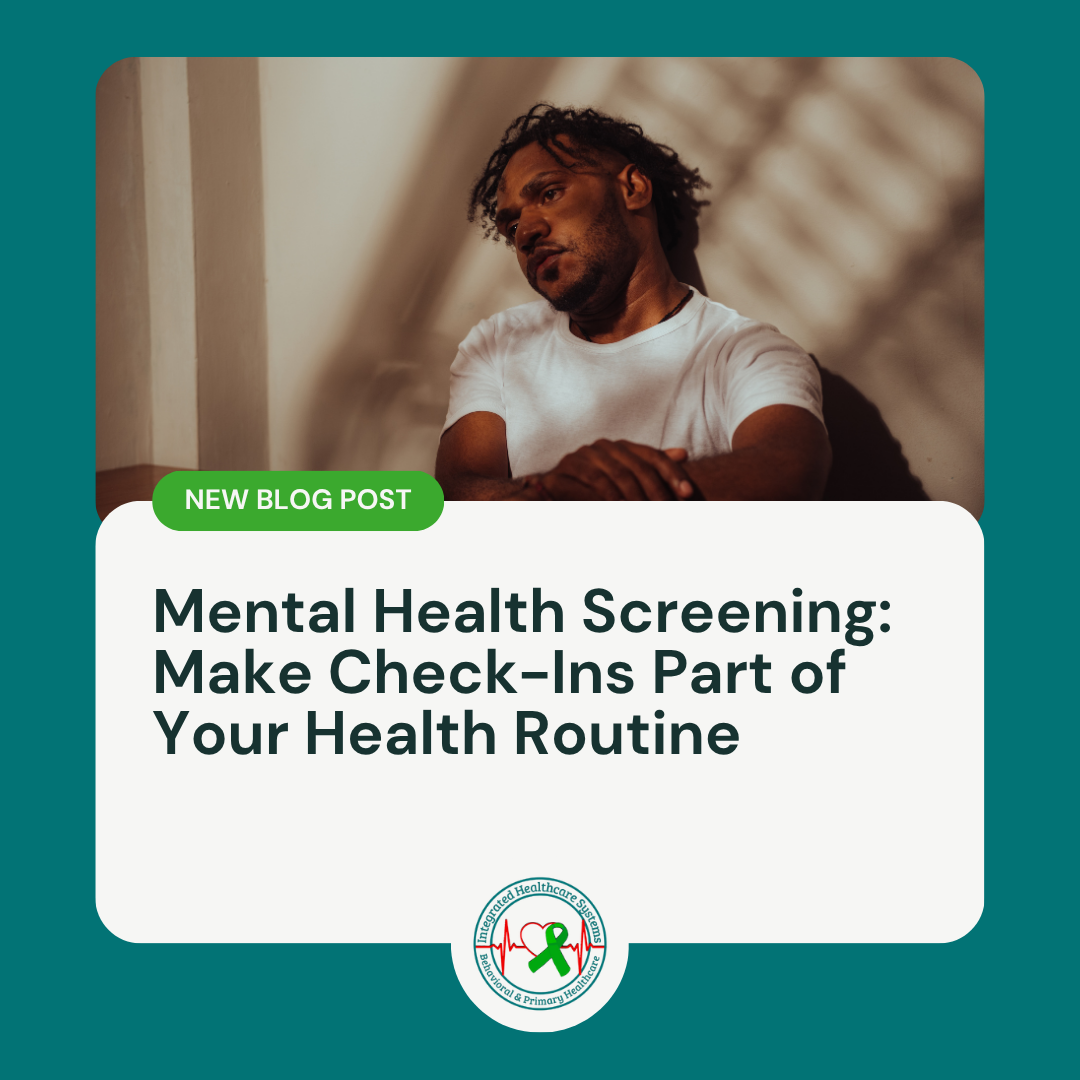
October is National Depression and Mental Health Screening Month, an opportunity to remember that mental health is an important part of overall health.
Many people keep up with physical exams, blood pressure checks, and other preventive care but hesitate to discuss changes in mood or emotional well-being. A routine mental health screening can help start that conversation. You do not need to wait until symptoms feel overwhelming to check in.
What Is a Mental Health Screening?
A mental health screening is a brief set of questions about your thoughts, feelings, behaviors, and daily experiences. Depending on the screening, you may be asked about changes in areas such as:
- Mood
- Sleep
- Energy
- Appetite
- Concentration
- Stress
- Interest in usual activities
- Ability to manage daily responsibilities
Screenings may take place during a primary care appointment, through a behavioral health provider, or by using a validated screening tool.
The purpose is to identify patterns that may deserve further attention. Just as a physical health screening can point to a possible concern, a mental health screening can provide useful information for deciding whether a more complete evaluation is appropriate.
A Screening Is Not a Diagnosis
It is important to understand the difference between screening and diagnosis.
A screening result cannot confirm that someone has depression or another mental health condition. Online screening tools are also not diagnostic instruments. Instead, a screening may indicate that certain symptoms are present and that a conversation with a qualified professional could be helpful.
A healthcare or mental health professional can look at the broader picture, including how long symptoms have been present, how they affect daily life, personal and family history, medications, physical health, and recent life changes. That fuller assessment helps determine what the symptoms may mean and which next steps, if any, are appropriate.
In other words, a screening is a starting point, not a label.
Why Routine Mental Health Screening Matters
Changes in mental health are not always easy to recognize. Symptoms may develop gradually or be mistaken for stress, exhaustion, aging, or a difficult season of life. Some people become so accustomed to feeling a certain way that they do not realize how much their daily lives have changed.
Routine screening creates an opportunity to pause and take stock. It may help someone recognize a concern earlier, put words to an experience, or discuss symptoms they have been reluctant to mention.
The U.S. Preventive Services Task Force recommends depression screening for adults, including pregnant and postpartum people and older adults. Screening is most useful when appropriate evaluation, treatment, and follow-up are available for those who need them.
Signs That May Warrant a Conversation
Depression can affect people differently. It does not always look like visible sadness, and a person does not need to experience every possible symptom before asking for help.
Consider speaking with a healthcare or mental health professional if you notice persistent or concerning changes such as:
- Sadness, emptiness, anxiety, or irritability
- Loss of interest or pleasure in activities
- Sleeping much more or less than usual
- Ongoing fatigue or lack of energy
- Changes in appetite or weight
- Difficulty concentrating, remembering, or making decisions
- Feelings of guilt, worthlessness, helplessness, or hopelessness
- Pulling away from friends, family, or usual routines
- Difficulty keeping up with work, school, relationships, or responsibilities
- Increased use of alcohol or other substances
- Unexplained physical discomfort that does not improve
- Thoughts of death, self-harm, or suicide
These experiences do not automatically mean that someone has depression. They can have several possible causes, including physical health conditions or medication effects. A qualified professional can help explore what is happening.
Asking for Help Is a Form of Health Care
People sometimes avoid mental health conversations because they worry about judgment, feel that their symptoms are not serious enough, or believe they should manage everything on their own.
Asking for help is not a failure. It is a practical health decision.
You can begin by talking with a primary care provider or behavioral health professional. It may help to describe when the changes began, how often they occur, and how they affect sleep, work, relationships, or daily routines. You can also bring screening results to the appointment as a starting point for discussion.
Integrated Healthcare Systems provides behavioral healthcare services in a compassionate environment, with care that considers each person’s individual needs. Connecting physical and emotional care can help providers develop a more complete understanding of a person’s health.
Make the Check-In Routine
Mental health can change over time, just like physical health. Checking in regularly can make it easier to notice those changes and seek appropriate support.
National Depression and Mental Health Screening Month offers a timely reminder: you do not have to be in crisis to talk about your mental health. A screening may be a small step, but it can open the door to understanding, professional guidance, and the support that fits your needs.
If you or someone you know is in immediate danger, call 911 or go to the nearest emergency room. For thoughts of suicide or urgent emotional distress in the United States, call or text the 988 Suicide & Crisis Lifeline at 988.